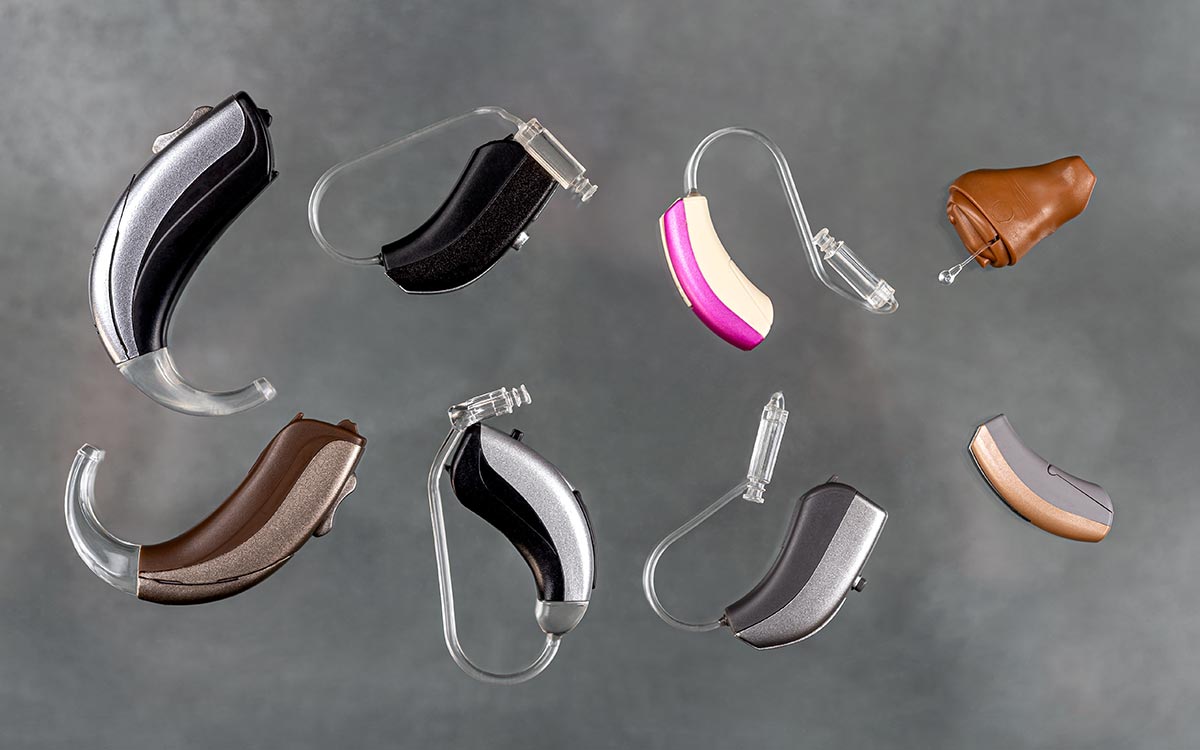
The total amount of hearing aid designs and technology levels on the market today can make the selection process feel complicated. But regardless of your needs, there’s a hearing solution for every lifestyle, preference, and degree of hearing loss or tinnitus. The key is merely identifying the one that fits you best.
Feeling certain about your choice begins with knowing how different hearing aids function and compare. We are going to study the primary styles available today to help you understand what sets each option apart.
Understanding In-the-Canal (ITC) Units
The Design:
ITC models are custom-made to sit within the ear canal, though a small part of the shell remains visible in the ear’s outer portion.
The Perks:
- Offers an improved profile than bulkier behind-the-ear units
- Specifically shaped to the wearer’s ear for a better fit
- A useful choice for those with moderate hearing needs
First-time wearers frequently gravitate toward ITC aids because they strike an ideal compromise between size and performance.
IIC (Invisible-in-Canal) Technology
Core Characteristics:
IIC models are the most tiny custom-fitted hearing solutions you can choose. They rest deeply inside the ear canal and are virtually invisible when worn.
User Pros:
- Highest degree of discretion for the wearer
- Strategic placement allows for an incredibly organic listening experience
- Designed for ease with an incredibly small footprint
The small form size of IIC models renders them perfect for mild hearing loss and anyone who values a stealthy hearing solution.
In-the-Ear (ITE) Hearing Aids
Structural Data:
A custom hearing aid rests snugly within the outer ear, available in both full-shell and half-shell configurations. They are custom-made to match the contours of your ear.
Why users prefer ITE:
- The bigger size makes it feasible to include more internal components and longer-lasting batteries
- Easier to handle for those with dexterity challenges
- Effective for an extensive spectrum of hearing impairments, ranging from mild to severe
Users often select these units for their straightforward, single-piece construction that avoids any external wiring or tubing.
Traditional Behind-the-Ear (BTE) Units
Functionality:
Placed firmly on the back of the ear, BTE models sit on the outer ridge. Audio travels into the ear canal through an internal tube or custom earmold.
Reasons for Selection:
- Highly flexible and durable
- Can be set to assist users with everything from mild to profound loss
- The spacious housing enables high-tech extras and built-in power cells
For those who value a dependable device that is easy to manage and provides plenty of volume, BTE is a top choice.
Receiver-in-Canal (RIC) Hearing Aids
What they are:
RIC hearing aids appear comparable to BTE models, but the speaker (receiver) sits inside the ear canal rather than inside the device behind the ear.
Why they are popular:
- Very natural sound quality
- The ultra-thin style is both light and nearly effortless to wear
- RIC technology is highly versatile for many different audiogram profiles.
RIC devices are one of today’s most common models, thanks to their blend of comfort, aesthetics, and performance.
Understanding Extended-Wear Systems
Introduction:
These devices are inserted far in the ear canal by an audiology professional and can stay in place for several weeks at a time.
Why individuals select them:
- Perfect for users who want to bypass the routine of handling hearing aids daily
- They are virtually impossible for people to notice because of their depth
- You can go about your whole life—including sports and rest—while wearing them
For an autonomous method of hearing assistance, extended-wear technology is the top recommendation.
Wireless Bluetooth Connectivity
Tech Specs:
Hearing aids with wireless connectivity that pair with smartphones, tablets, computers, and sometimes TVs.
Digital Benefits:
- Send calls, music, and audio directly to the hearing aids
- Adjust settings via an app
- Enhances everyday life by making technology interaction seamless and clear
Most contemporary RIC, BTE, and ITC hearing aids now offer a Bluetooth-enabled version.
Middle-Ear Implants
What they represent:
A surgical method that works by shaking the tiny bones inside the ear to provide amplified audio.
Who they are for:
- An accessible path for patients who are unable to wear standard acoustic devices
- This is a specialized choice for those with chronic ear canal sensitivity.
An exhaustive meeting with an ENT professional is necessary before considering a middle-ear implant.
Selecting Your Ideal Auditory Option
There is no one single “best” hearing aid; rather, there is a best one for you, determined by your medical needs and personal comfort. By visiting an expert, you can explore various models and see which one feels most natural to you.
Take the initiative for your hearing health by booking an expert hearing evaluation today. It is the most important move you can make toward an increasingly vibrant and confident life.
Sources:
https://www.mayoclinic.org/diseases-conditions/hearing-loss/in-depth/hearing-aids/art-
20044116
https://www.hearinglife.com/hearing-aids/types
https://www.nidcd.nih.gov/health/hearing-aids