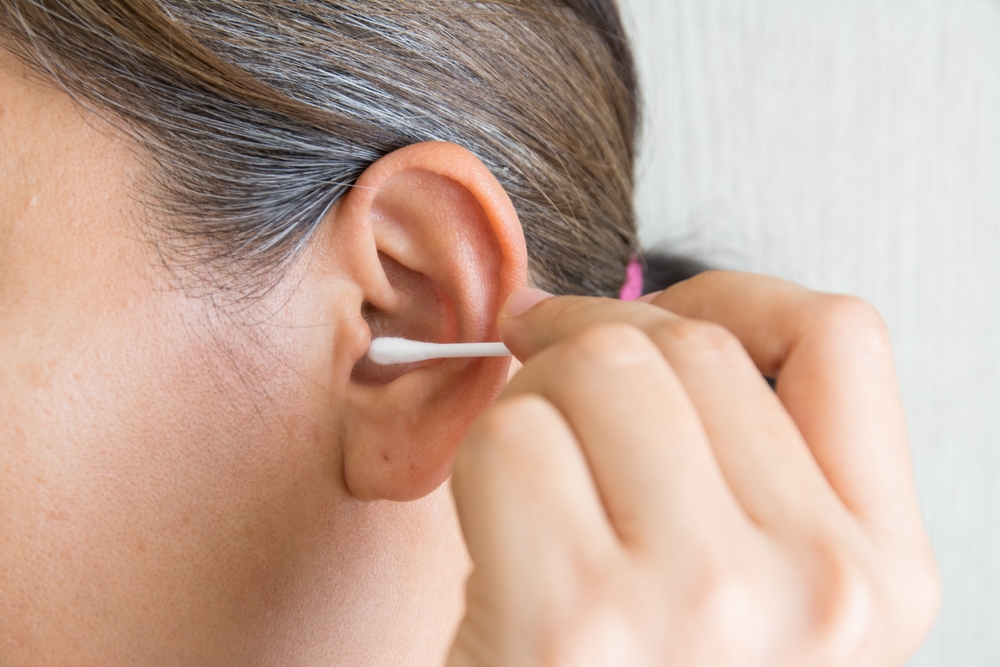
In most people, earwax naturally moves outward and eventually falls away or washes out during normal bathing. This self-cleaning process usually keeps the ears balanced without any need for intervention.
Complications develop when the rate of earwax accumulation outpaces the body’s ability to shed it. Below, we’ll take a look at why earwax sometimes builds up, what you can safely do at home, and when to seek professional help for earwax blockage.
Why Your Ears Need Earwax for Health
Despite its negative reputation, earwax is a critical component of healthy ear physiology. By utilizing its sticky consistency, cerumen prevents debris and microorganisms from entering the sensitive deeper ear. It also keeps the ear canal moisturized and prevents irritation.
Factors That Disrupt the Ear’s Self-Cleaning Cycle
Specific behaviors and physical conditions often cause earwax to stagnate rather than exit the canal. Impacted earwax frequently triggers a sensation of fullness, diminished hearing clarity, and localized ear pain.
Typical drivers of excessive earwax accumulation involve:
Frequent use of cotton swabs for cleaning
The use of swabs frequently bypasses the migratory path and compacts the wax deep inside. Repeatedly pushing the wax inward results in a chronic, symptomatic earwax blockage.
Daily use of hearing aids or audio earbuds
In-ear hardware can trap earwax, causing it to accumulate and eventually become compacted.
Narrow or curved ear canals
Individual anatomy, such as a sharp canal bend, can trap wax and prevent natural shedding.
Excessive generation of earwax
For some, the volume of earwax produced simply exceeds the capacity for natural removal.
Earwax Removal: What You Can Safely Do at Home
Minor cases of buildup can often be managed with gentle softening agents that assist the ear’s cleaning process. Recommended safe options include:
- Clinical-grade cerumenolytic drops are effective at dissolving dense wax.
- A warm-water rinse using a soft bulb syringe can assist in removing softened wax.
- Hydrogen peroxide drops can be used to bubble away debris, followed by careful draining.
Such interventions are often sufficient to re-establish the ear’s natural migratory flow. However, it’s important to note that there are several things that should never be used to remove earwax at home. These methods can push wax deeper, irritate the ear canal, or even damage the eardrum:
- Cotton-tipped applicators or swabs
- Metallic implements or hairpins
- Ear candling products
- Intense irrigation using unapproved devices
Criteria for Clinical Cerumen Extraction
In instances of severe impaction, the cerumen becomes too dense for home remedies to be effective. Under these circumstances, a clinical extraction performed by a professional is the only safe course.
A trained ENT can visualize the obstruction and use precision tools to clear the canal. Patients often experience immediate auditory clarity following a professional cerumen extraction. Methods such as suction, specialized loops, or precision irrigation are standard in a clinical setting.
Professional help is warranted for any of these symptoms:
- Abrupt loss of hearing clarity
- Acute aural discomfort or intense pressure
- Ongoing internal noise sensations
- Lightheadedness or balance issues
- Non-responsive symptoms following the use of home kits
Conclusions on Aural Hygiene and Health
Generally, the auditory system is highly efficient at maintaining its own cleanliness. Aggressive manual cleaning is more likely to cause harm than to resolve a blockage.
Should you suffer from chronic buildup, our team can provide a preventative care protocol. Your hearing health is best served by a balance of conservative care and expert intervention. If you are struggling with earwax issues, call us today to book an evaluation. Our team is ready to assist you!