Auditory obstruction can be disorienting, often making you feel isolated from the world around you. While the fear of permanent hearing deterioration is a common first reaction, the true culprit is frequently a simple collection of earwax.
Distinguishing between a wax impaction and true hearing loss is vital for identifying if you need a simple removal or a formal audiological exam. There is no reason to feel overwhelmed if sounds seem muted. While only a clinician can confirm the cause, understanding these essential indicators of wax vs. auditory decline can provide instant clarity.
Recognizing Cerumen Blockage Symptoms
Cerumen is actually a healthy, natural secretion intended to shield the ear canal from particles and external debris. Medical issues only develop when the wax neglects to move out of the ear, resulting in a significant accumulation or blockage.
Typical markers of an obstruction involve:
- Gradual or abrupt dampened hearing
- A feeling of pressure or blockage in the ear
- General ear irritation or mild soreness
- Buzzing in the ear (tinnitus)
- Auditory sharpness that changes or improves momentarily with jaw movement
Because blockages are physical, they commonly impact just one ear at a time rather than both equally. The positive aspect is that clinical removal typically results in an immediate restoration of your original hearing levels.
What Hearing Loss Feels Like
Auditory decline, especially presbycusis or noise-induced hearing loss, has a tendency to progress gradually and doesn’t improve when the ear is cleaned.
Symptoms of actual auditory impairment may include:
- Struggling to follow discourse when background noise is audible
- A persistent need for speakers to articulate more distinctly or audibly
- A tendency to increase sound volume notably to compensate for hearing loss
- Trouble hearing high-frequency tones like nature or soft voices
- A symmetrical reduction in auditory function in both ears
Contrasted with earwax buildup, auditory impairment doesn’t typically induce a sensation of obstruction or fullness.
Quick Guide: Earwax vs. Hearing Loss
A few basic indicators can help you determine whether you are dealing with a manageable obstruction or a more permanent change:
- Timing: Cerumen blockages often come on suddenly; hearing loss progresses gradually
- Resolution: Cerumen hearing shifts are usually brief; auditory impairment is often irreversible
- Markers: Fullness suggests a clog; struggling with word clarity points to impairment
- Laterality: Wax often affects one ear; hearing loss frequently impacts both
The Risks of DIY Cerumen Removal
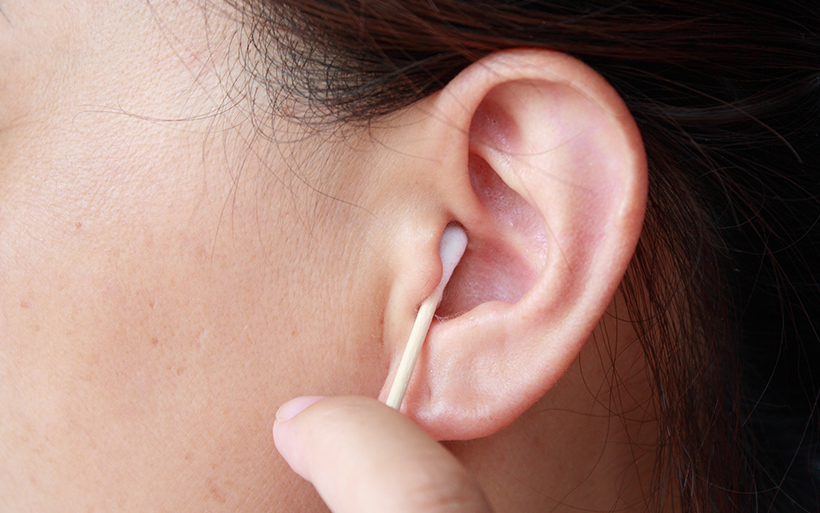
You may feel compelled to presume earwax is the cause — and reach for cotton swabs or over-the-counter treatments. In reality, manual poking often compacts the cerumen deeper against the eardrum, making the impaction worse.
Medical data shows that self-cleaning often results in unintended damage or more complex blockages.
On the flip side, assuming a problem is merely wax when it is actually hearing loss can prevent you from getting the assistance you require to remain connected.
Ways a Professional Evaluation Assists
A specialist can employ an earlight to instantly see if a mechanical blockage is present.
If a blockage is found, a clinician can remove it safely, often restoring your hearing immediately.
When the ear is unobstructed but sound remains muted, a clinical assessment is necessary to audit your auditory integrity.
Health experts advise obtaining a clinical evaluation as soon as you notice auditory fluctuations that impact your routine.
Final Points on Cerumen and Auditory Health
Feeling as if auditory signals are muted doesn’t necessarily indicate a lasting change.
In many cases, earwax buildup is the cause, and it’s extremely treatable.
Obtaining professional attention ensures you find the exact cause and the proper hearing aid or solution for your hearing requirements.
Keep in mind: The only accurate way to tell the difference between cerumen impaction and hearing loss is with a clinical evaluation.
Finding answers promptly can avert unnecessary stress and guarantee you obtain the appropriate care at the right moment.
If you’ve observed a shift in your auditory ability, call our clinic for a formal assessment today.