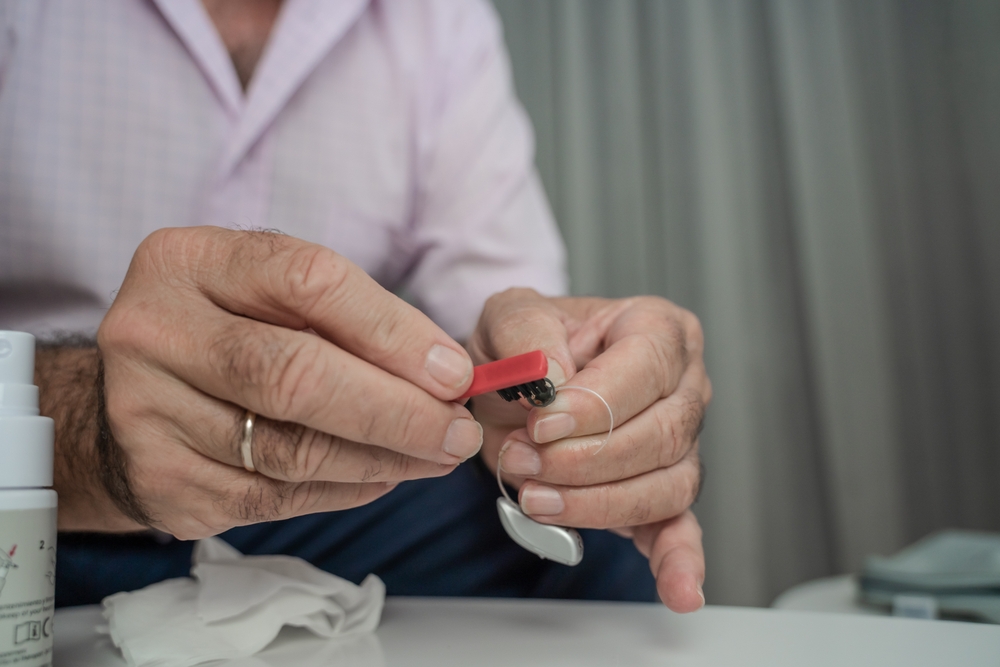
After you have become accustomed to wearing your hearing aid, it becomes a critical element of your day-to-day routine. The thought of it breaking down can be daunting, not simply because of the hassle but also due to the potential cost of repairs or replacements.
How to best maintain your hearing aid
By being aware of the prospective threats that can damage your hearing aid and taking measures to care for it properly, you can protect its effectiveness and continue to enjoy the increased quality of life it offers.
Proper battery maintenance
Your hearing aid’s functionality is highly dependent on its battery. As a result, selecting the correct batteries for your device is essential. Speak with your hearing specialist to determine the best battery type for your model.
Handling the batteries with care is equally important. The natural oils, dirt, and moisture on your skin can pass on to the batteries and cause contamination, jeopardizing their performance and potentially causing damage.
Always wash your hands before swapping out the battery, and make sure they are thoroughly dried to prevent introducing moisture into the device.
Follow the manufacturer’s instructions diligently, especially regarding battery care. To extend the battery life of your hearing aid, be certain to power it off when not using it and keep it stored in a secure, dry spot. Knowing the average lifespan of a battery can also be really handy.
Note on your calendar when you change the battery, so you can prepare for when it needs to be replaced. It’s essential to have a spare battery with you at all times, specifically when you are not at home, in order to avoid being left without power all of a sudden.
Minimize the risk of moisture damage
As electronic technology, hearing aids are susceptible to moisture. Even slight contact can cause harm or complete failure of the device. To safeguard your hearing aid, consider investing in a dehumidifier developed specifically for hearing aids. This unit supplies a secure and dry atmosphere for your hearing aid when not in use, safeguarding it from damage caused by excessive moisture.
To safeguard your hearing aid from moisture damage, it’s a good idea to take it out before taking part in activities that make you perspire heavily. Consult taking off your hearing aid to exercise, especially outdoors, with your hearing specialist, as doing so could jeopardize your safety by reducing your recognition of important auditory cues, including traffic noises or warning alarms. If possible, opt to exercise inside where it is safer to take out your hearing aid, and make sure to remove your device before bathing or swimming.
Also, avoid using hairspray, spray deodorants, and other aerosol items while using your hearing aid. Extended exposure to these products can lead to harm to the device, as the moisture and chemicals they contain can accumulate and result in long-term deterioration over time. In order to decrease exposure, use these types of products before putting in your hearing aids.
Manage earwax buildup
While earwax serves as a natural shield, protecting your ears from debris, dirt, and tiny insects, it can also hamper the effective performance of your hearing aid. Earwax can accumulate in the device, causing it to breakdown. For proper maintenance, schedule an appointment with your audiologist or doctor to assess the amount of earwax accumulation and develop a customized cleaning plan tailored to your ears and hearing device.
Cleaning your ears safely is essential– never insert foreign objects into your ear canal. Instead, allow warm water to flow into your ears during showers, which can help disperse and flush away some of the wax. It is also recommended to have your ears cleaned routinely by a professional. Though this may be a bit of a hassle, it’s a minor concern compared to the disappointment and problems that can occur from a hearing aid that’s not functioning effectively due to a buildup of earwax.
To properly clean your hearing aid, carefully adhere to the guidelines provided by the manufacturer.
Different types of hearing aids may require different cleaning techniques, and using the wrong method could cause harm to your device. If you are uncertain about how to clean your hearing aid correctly, it is recommended to seek guidance from your hearing specialist or hearing aid manufacturer.
Basic steps for continued dependability
Once you get used to using your hearing aids, they become a crucial facet of your day-to-day routine, making it difficult to picture life without them. By implementing a few simple safety measures, you can protect your hearing aids from harm and preserve their reliability over the long run. Prioritize routine maintenance, store them properly, and handle them with care, ensuring you can continue to reap the benefits of improved communication and a more fulfilling lifestyle.
If you are having troubles with your hearing aid or need to schedule a routine maintenance appointment, please arrange for a visit.